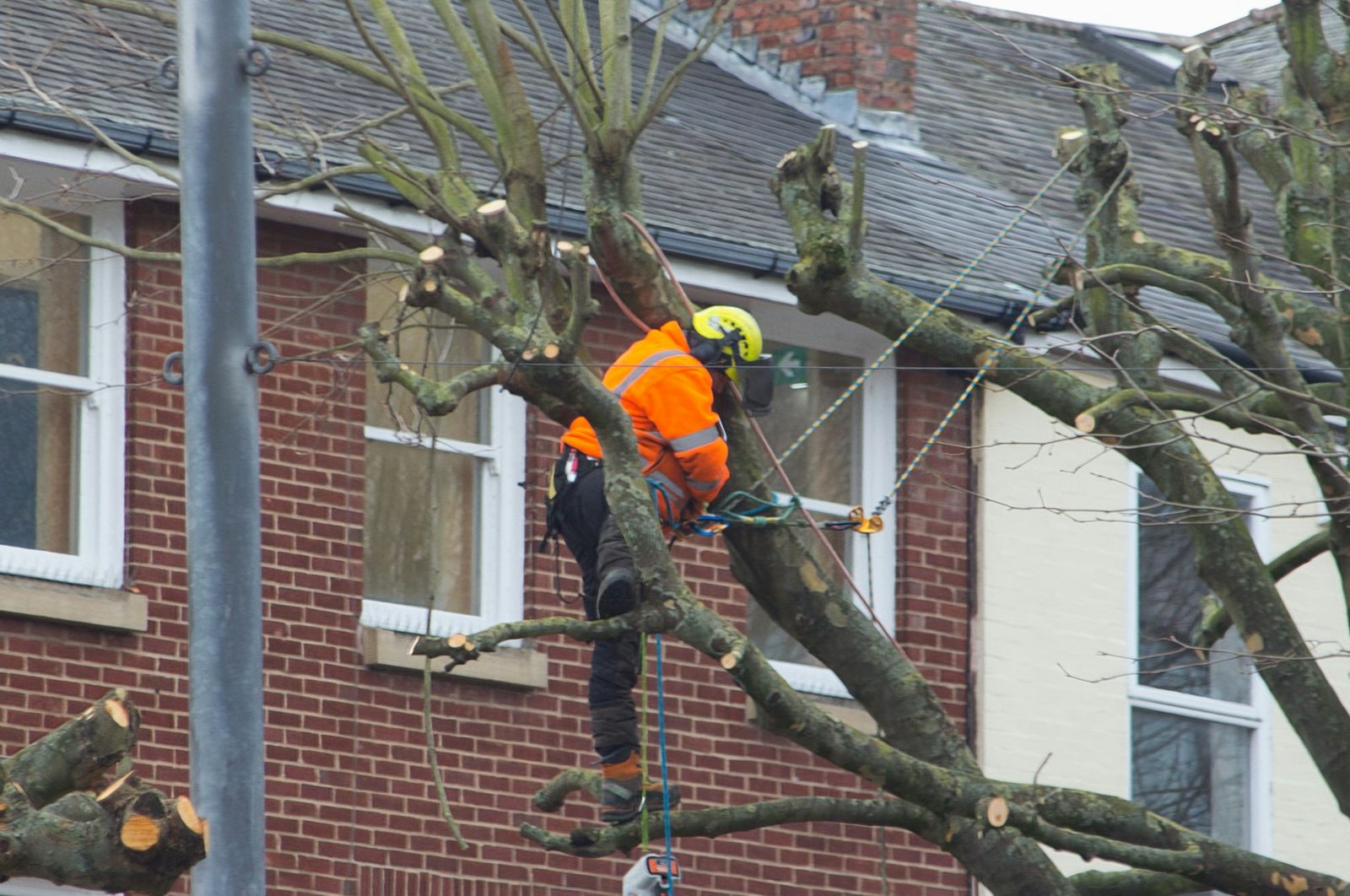
If the problem is a limb, trimming may do. If it is the trunk, the roots or the whole shape of the tree, removal comes into it. OSU's pruning fact sheet says mature trees seldom need pruning, and also that a tree in the wrong place "can be removed", especially when it would have to be mutilated to fix what it is doing. Both are worth keeping in mind when someone is selling you one or the other.
Signs that call for a closer look
These come from ISA's tree risk checklist, in our words. It says a yes to any of them means an ISA Certified Arborist should examine the tree.
- Big dead limbs, or broken ones still hanging in the crown.
- Limbs already on the ground, or bark coming loose on the trunk.
- A crack in the trunk, or at the point where a limb joins it.
- Hollows or soft rotted wood in the trunk or main limbs.
- Mushrooms at the base.
- Recent digging, new paving or a change in soil level around the roots.
- Small leaves, or leaves turning an odd yellow.
- A past topping or very heavy pruning.
It also singles out cracks in the soil near a leaning tree, which can mean the roots are moving, and trunks that divide into two main stems, which can often be failure points.
When trimming is usually enough
ISA lists limbs worth removing as those interfering with utilities or structures, blocking streets or sidewalks, dead or storm-damaged or decayed, or diseased. The city's tree guide sets a ceiling: "Never remove more than one-third of the total mass of an established tree." If a plan needs to take more than that, ask why the tree is staying. Cables can help hold a weak limb, but ISA is clear that they guarantee nothing.
OSU says a poorly timed cut seldom kills a plant, but there are still preferences here. The guide says to prune most trees while dormant, to avoid pruning from late summer until early winter, and to avoid the spring flush of growth. Spring-flowering trees like redbud and crabapple wait until the flowers fade. Storm damage is the exception, since OSU says to prune it as soon as possible.
When removal is the better call
ISA's list for bringing in an arborist about removal runs: dead or dying or too risky to keep, blocking something pruning cannot fix, crowding better trees, or standing where construction has to go. The guide adds that some storm-damaged trees "may require removal instead of selective pruning".
The other side of it comes from the Arbor Day Foundation's hiring bulletin, which Oklahoma Forestry Services publishes: "Beware of an arborist who is eager to remove a living tree." It calls removal a last resort. A second opinion is worth having before you lose a tree you could have kept.
Topping is not a middle ground
The idea is to take the top out so the tree cannot reach the house. OSU's fact sheet lists that as a myth. ISA ranks topping as "perhaps the most harmful" thing done in pruning, and says it can take 50 to 100 percent of a tree's leaf-bearing crown. OSU says the shoots that follow are weaker than the original limbs and more likely to split off. In a place that gets ice, that makes the tree worse. If the tree really must shrink, ISA's method is to shorten a limb only to a side branch at least a third as thick as the limb, and it adds that replacing the tree is sometimes the better answer.
What changes the answer in OKC
- Bradford and other Callery pears. The city guide says their branch structure can split large limbs or the whole tree after ten or more years, and it says pruning young trees helps. An old pear with tight, narrow limb angles is one to have looked at.
- Silver maple and other surface rooters. Besides the wind damage note, the guide names silver maple, sycamore, sweetgum, baldcypress, mulberry and mimosa for surface roots that can crack sidewalks and foundations.
- Post oak and blackjack oak. Both are native to Oklahoma County on the state's list. The state's forest plan says the old Cross Timbers tracts hold post oaks 200 to 400 years old, and calls them low, slow-growing trees. That is about old forest, not your yard, but a short oak can be far older than it looks, so ask before writing one off.
- Big trees close to the house. The city's 2016 plant list says medium to large trees should be planted no closer than 30 feet from a building. One that is closer may be fine for years, but that is the distance the city's planners had in mind.
- Pruning paint. You may read that every cut must be painted. OSU says research largely supports dropping pruning paint, and that it may slow recovery.
- Wires. If any part of the tree is within 10 feet of a line, the power lines page applies before anything else.
Getting an opinion you can trust
Whoever gets paid for the removal is not a neutral judge of whether you need one, so ISA's advice to collect several estimates applies here as much as anywhere. Oklahoma Forestry Services points people to the Find an Arborist tool at TreesAreGood.org, and says to widen the radius when you search your town. The city's guide says County Extension offices have information on pruning too. If the tree is dying and you do not know why, see the dying trees page. If it sits by the street, see the street trees page first. The questions page covers the hiring.
Phone line opening soon
Allow us to connect you to a local pro.
Sources
- Oklahoma State University, Pruning Ornamental Trees, Shrubs, and Vines, HLA-6409 (PDF, an older copy)
- International Society of Arboriculture, Recognizing Tree Risk (PDF, 2021)
- International Society of Arboriculture, Why Hire an Arborist? (PDF, 2021)
- City of Oklahoma City Planning Department, Putting Down Roots, second edition, about 2010 (PDF on the state forestry site)
- Arbor Day Foundation, How to Hire an Arborist, Tree City USA Bulletin No. 6 (PDF on the state forestry site)
- International Society of Arboriculture, Why Topping Hurts Trees (PDF, 2021)
- Oklahoma Forestry Services, Oklahoma Native Trees by County (PDF)
- Oklahoma Forestry Services, The Oklahoma Forest Action Plan, 2020 (PDF)
- City of Oklahoma City, Trees and Plants for Oklahoma City (PDF, dated August 2, 2016)
- Oklahoma Forestry Services, Certified Arborists in Oklahoma
Read on 2026-11-05. External pages can change.